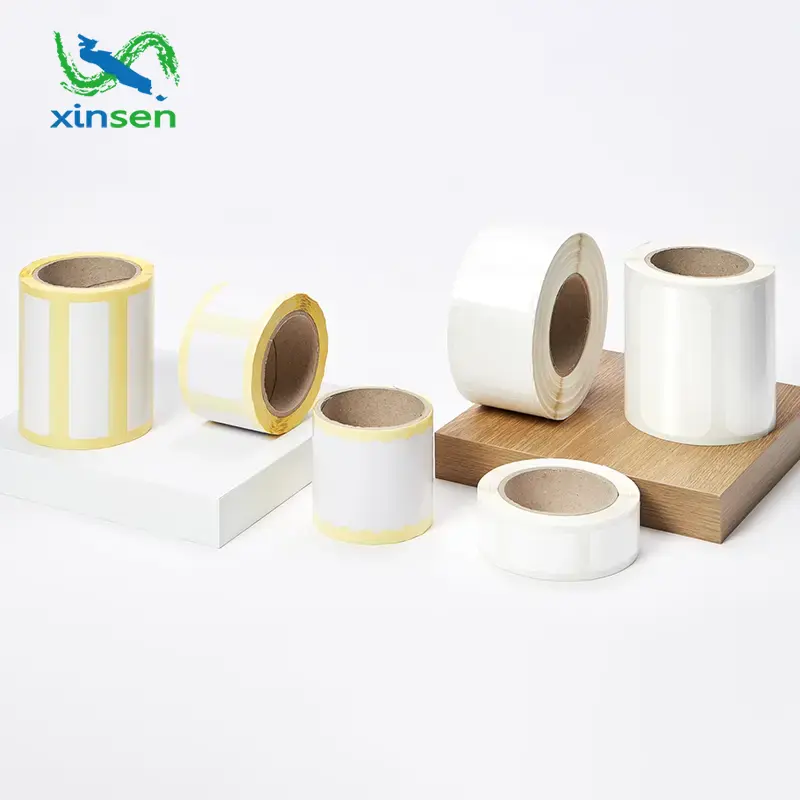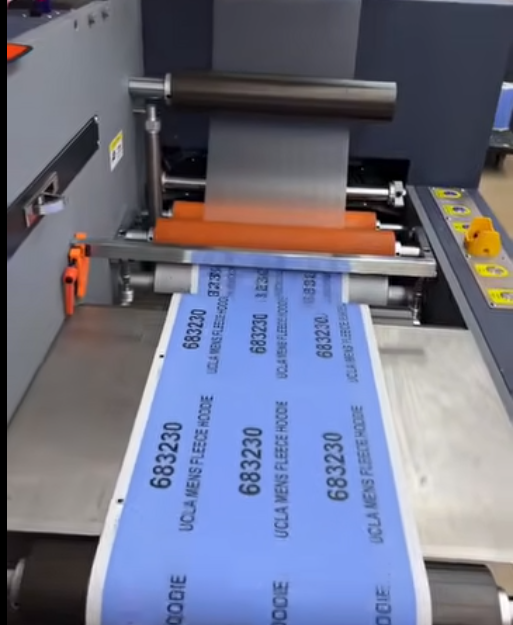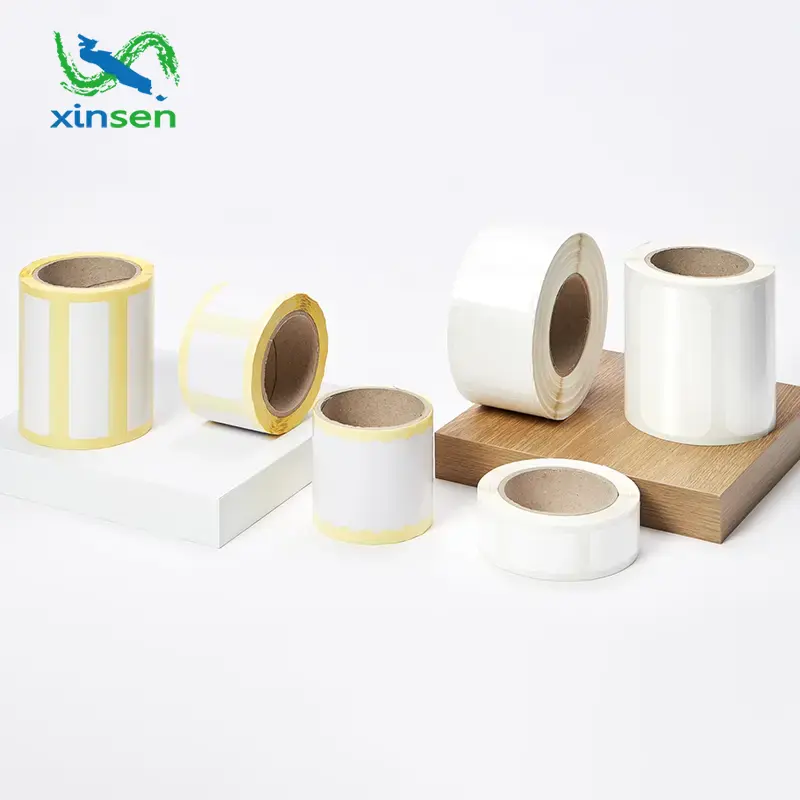
As transparent pressure-sensitive labels become more common in cosmetics, beverages, food, and pharmaceuticals, label printers are confronting a stubborn reality: clear film is far less forgiving than white paper. Because the substrate itself is transparent, ink adhesion is weaker, multi-layer registration errors are highly visible, and even a tiny misalignment can create see-through gaps, halos, or blurred edges.
The standard production combination—CMYK four-color plus Pantone spot colors plus a bottom white ink layer—has become the industry’s baseline. But according to consolidated production and prepress standards, the real battle is fought in the white plate and trapping strategy. The guidance suggests that transparent labels are not primarily a color problem, but a white-ink and registration problem.
For Xinsen transparent adhesive labels, files should be CMYK, 300 dpi, and vector-based. RGB images should not be sent directly to press. Four-color, spot-color, and white-ink elements must be placed on separate spot layers, typically named CMYK, Spot, White, and Die Line. The white layer is usually set as a separate spot color and filled with 100% K so the plate can be identified quickly; it must not be merged into the CMYK channels.
Total CMYK ink coverage should stay at or below 280%. Heavy ink stacks dry slowly on transparent film, increasing the risk of blocking, color bleeding, and scratching. Solid black should be K100 only, not a four-color black build.
Spot colors are essential for brand colors, high-saturation blocks, metallics, and fluorescents. They should sit above CMYK, while the white base remains at the bottom. For PET film, flexo printing often requires a primer, and digital UV printing should use film-specific UV inks. Otherwise, white and color inks may peel off in large areas. Thin PVC stretches easily and causes registration problems, so rigid PET is preferred.
The white ink layer can be printed in two ways. The common method is underprint white: white is printed first on the film, then CMYK and spot colors are layered on top. This blocks the bottle or container color and keeps colors saturated. It is widely used for food and daily chemical labels. The second method is overprint white, in which white is printed locally after color inks to create semi-transparent gradients or hollow patterns. This is mainly used in high-end cosmetics.
The white plate must be expanded, or trapped, because multi-layer printing has a normal registration tolerance of about ±0.1 mm. If the white plate is exactly the same size as the upper graphics, any misalignment creates a transparent white edge, or halo. All graphics, logos, and spot-color blocks should have their white base expanded outward by 0.1–0.2 mm. Small text and fine lines of 0.3 mm or less should be expanded by 0.2 mm. If they are not expanded, they can break, show white gaps, or look blurry.
For areas that must remain fully transparent, the white plate should be knocked out completely, with no residual white ink. QR codes and barcodes require special attention: their white base should extend about 1 mm around the code, with a full quiet zone. Without a white base on transparent film, scanning may fail.
Large solid white areas need segmented ink-relief channels or venting grooves. Thick white ink may cure incompletely under UV, leaving a tacky surface or causing back-side blocking. Dark spot colors and dark four-color solids should have two layers of white underneath to prevent the background from showing through and making the color gray. White ink must never bleed into transparent areas, or it will create a white haze that destroys the clear effect.
Flexo and digital UV printing typically hold registration to about ±0.1 mm, while screen printing may reach ±0.2 mm. Fine graphics should not sit tightly against spot-color boundaries; a 0.2 mm buffer should be reserved. When a dark spot color covers a CMYK area, the spot should be inset by about 0.1 mm to prevent color overflow.
The standard print sequence is: film primer → bottom white ink with expanded trapping → CMYK four-color → Pantone spot colors → varnish or spot UV → die-cutting and rewinding. Printing color before the white base is prohibited, because the white ink will cover and muddy the colors.
Metallic and fluorescent spot colors should not be overprinted with multiple layers of four-color halftones, as the dots can destroy the metallic or fluorescent effect. Light spot colors need a solid white base underneath; otherwise, a dark bottle will completely absorb the light color. Low dot percentages below 10% are almost invisible on transparent film, so large light gradients are not recommended. Gradient areas should use a thicker white base. Halftone dots over spot colors can also create moiré patterns.
For transparent labels, minimum text size should be at least 3 pt, and solid lines should be at least 0.2 mm. Anything smaller can break or fill in. Thin fonts and hairline English text should be bolded or given an inner stroke of about 0.3 mm. Light text on a dark background should have a same-color inner stroke to offset transparent gaps caused by registration errors. Knockout letters and patterns should have gaps of at least 0.5 mm; smaller gaps may not fill properly with white ink and will look mottled.
The industry standard for white-plate expansion is about 0.15 mm for regular graphics, 0.2 mm for small text and fine lines, and at least 0.1 mm for large solid blocks. For reverse transparent knockout areas, the white plate should be inset by about 0.1 mm to prevent white ink from spilling into the clear zone. Where spot colors meet CMYK, a trap of 0.08–0.1 mm should be used, with the darker spot color pressing over the lighter four-color area.

High-transparency PET, common in daily chemicals and beverages, offers clean color reproduction and strong highlight transparency. Its white plate can usually be expanded by 0.15 mm, but thin PET stretches easily and can cause registration drift. Soft PVC, often used for low-cost daily goods, has poor ink absorption and stretches easily; its white plate should be expanded by 0.2 mm, and extremely fine lines or small text should be avoided. Matte transparent PET weakens color saturation, so spot and four-color inks need a thicker white base, with 0.2 mm expansion and bolder graphics. Electrostatic transparent PP film, used for food sealing labels, has the weakest ink adhesion. It requires a special primer and white ink, and multi-layer overlays should be minimized because they can delaminate or fall off.
In short, transparent adhesive label printing is a systems problem. The film, white plate, trapping, ink sequence, registration tolerance, and design must be planned together. As clear packaging continues to grow, the printers and brands that master these hidden rules may gain a visible advantage on the shelf.